Author: Yilun
Translator: chat gpt, Yilun
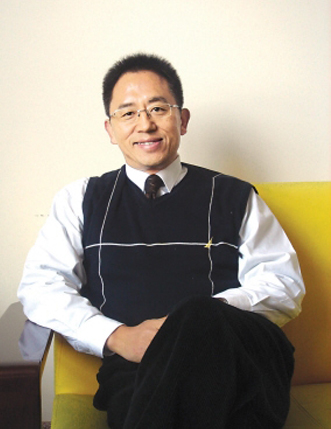
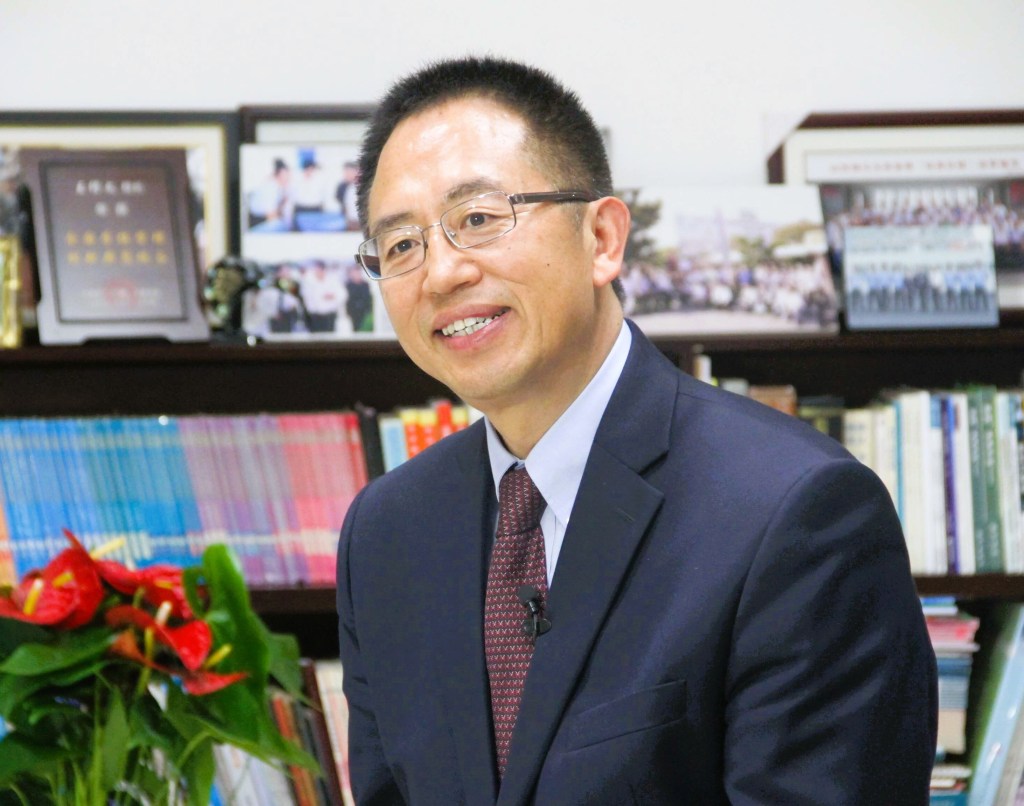
Wang Xiuwen, born in Laoshan, Qingdao, Shandong, 1962
Preface
About five years ago, I first heard from my mother about a remarkable principal named Wang Xiuwen in Yangzhou. She had visited him.
Our family had little connection with Yangzhou, so I asked my mom, “How do you know this principal in Yangzhou?”
“Principal Wang is also from Shandong, about the same age as Mom, and a highly esteemed education expert in Zibo. He went to study and visit the United States early on and earned a Ph.D. At that time, very few people in Zibo achieved such accomplishments. Later, he became the Vice President of New Oriental Group, in charge of its basic education sector, and served as the founding principal of Beijing New Foreign Language School at Yangzhou…”
As a international student, I had little concept of what studying abroad in the 1980s was like, but hearing the words “Principal of the New Oriental” made my eyes widen. New Oriental is a well-known name in the Chinese international students community and even in the Chinese education sector. What shocked me even more was that this principal was a torchbearer for the main venue’s cauldron lighting during the 2008 Beijing Olympic Torch Relay in Yangzhou.
In an instant, an image of a “figure of Libertus” standing on a cliff, holding a book in one hand and raising a torch in the other, appeared in my mind.
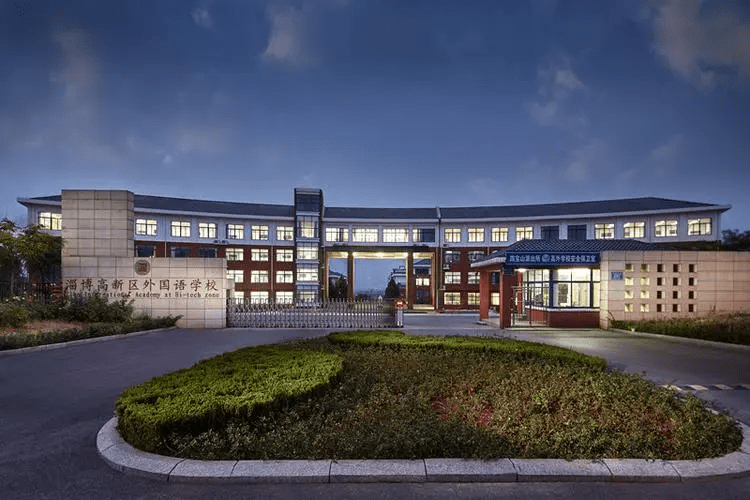
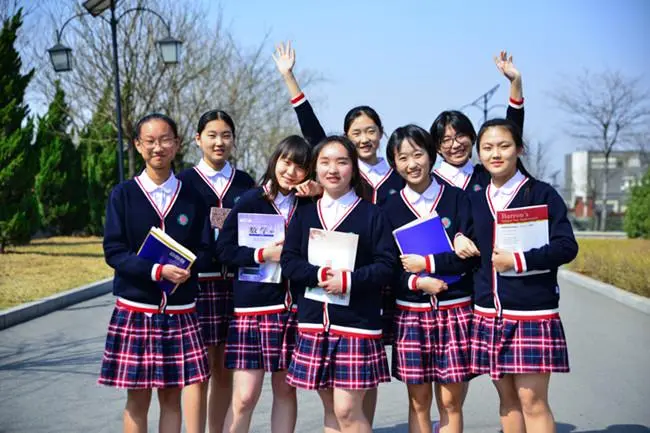
In 2015, I went back to Zibo for the New Year during my junior high school years and visited Zibo International Academy at Hi-tech Zone, founded by Wang Xiuwen and his group, with my parents. I still remember standing on the playground, looking at this hope-filled paradise for children in the high-tech zone, thinking that many of them would go out into the world in the near future, becoming successful individuals, just like the newly developed “high-tech zone,” with a bright future ahead.
In 2022, I had my first WeChat call with Principal Wang. Facing a respected elder, I was a bit nervous at first, but his kind and friendly tone immediately put me at ease. Unexpectedly, we chatted like friends, joking and laughing, and I gained a lot from our conversation, deeply attracted by him.
I had never had such a pleasant conversation with a principal before. This shattered my traditional perception of a “principal” and made me curious: what kind of person Principal Wang is? Beyond his numerous titles and honors, what truly makes him an outstanding yet down-to-earth principal?
One day in 2023, with curiosity and respect, I began my interview with Principal Wang.
—
Changed and Unchanged
That afternoon, just as I finished editing the second part of my mother’s story at the National Library of Singapore, I went downstairs to a café to prepare for the interview.
I remembered my first conversation with Principal Wang, also a WeChat call in a café. The similarity in medium and environment made our communication feel like a continuation of our last chat. The difference was that last time, the principal was the one getting to know me, while this time, I was the one interviewing him. This change seemed to signify my progress and growth as a student.
The library as a location embodied the themes of “learning” and “heritage,” and the format of the interview echoed the traditional learning mode of “student asks, teacher answers.”
Thus, as I waited for the principal’s call, I felt like a student sitting outside the teacher’s office, excited and a bit anxious.
When the interview began, to overcome my nervousness, I started by sharing some amusing anecdotes from editing my mother’s story. My mother was not only the link between me and the principal but also someone who, being a close acquaintance of his and of a similar age, helped us quickly establish a rapport. Subconsciously, I might have even assigned the principal a “parental” role. He is someone whom young people easily and willingly see as a parental figure.
We started with childhood.
—
Childhood
Wang Xiuwen was born in July 1962. He has two birthdays, one on the Gregorian calendar and one on the lunar calendar. Interestingly, he recalls that neither of these dates is necessarily accurate. He mentioned that his birthday on the household registration might be wrong by a day.
“Back then, birthdays were like that, we just celebrated them approximately.”
At first, I was puzzled as to how someone could be uncertain about their own birthday, but the next moment I was deeply moved by this detail. What struck me was not the anecdote itself, but the “sense of time” it encapsulated and the generational gap between us.
I suddenly realized how commonplace birthdays are for those of us born in the 2000s. A birthday is a date, a label, a ceremony—it’s precise, specific, and significant, a timely gathering. However, for many from Principal Wang’s generation (our parents and grandparents), the vagueness, abstraction, and even “unimportance” of birthdays made them more like an indefinite wait.
On a micro level, contemporary Chinese families often have one or two children, making it easy for parents to remember birthdays. But in the past, especially in rural families with six or seven siblings, it was difficult for parents to remember each child’s exact birthday—let alone provide equal and sufficient love (including companionship, education, and rights). Hence, individual birthdays were often neglected and forgotten during that era.
On a macro level, the material scarcity in China during the 1960s meant that many families struggled to meet basic needs, leaving no room to pursue the ritualistic significance of birthdays. The collision of Gregorian and lunar calendars further complicated things, making birthdays seem like they had “form” but no “substance.” As a result, Principal Wang’s casual remark, “It’s roughly that day,” truly reflected how birthdays were treated. For us, birthdays are a thing, but for the older generation, they are an atmosphere.
I speculate that this difference between the specific and the vague partly explains why young people talk about zodiac signs (determined by month), while older people talk about Chinese zodiac signs (determined by year). This also creates a funnel-like structure in the generational transmission, where “inheritance” becomes a process of “filtering and refining.” This analysis essentially returns to the topic of oral history, revealing the significance of recording individual memories across generations. It allows us to understand our location and define our coordinates.
In 1962, the Great Chinese Famine had just passed. Wang Xiuwen was born in the suburbs of Laoshan, Qingdao city, Shandong province.

“At that time, during the famine, there wasn’t enough food to eat.”
The famine in China during the early 1960s is a terrifying memory for many older generations. Survival was hard, and having children was even rarer. It wasn’t until the second half of 1962 that the situation started to improve, and more children were born. Wang Xiuwen was in one of the early waves born after the famine. His parents had him late in life; he had three older sisters and two older brothers, making him the youngest in the family.
“My father passed away when I was five. My mother lived to be over 100 years old. She passed away shortly after her 100th birthday last year.”
The eldest sister was 18 years older than Wang Xiuwen. More than just a sister, she was like a mother to him. Wang Xiuwen spent most of his growing years living with her. With his father passing away early, everyone was busy in those times, and the environment didn’t value education much. As a result, Wang Xiuwen grew up largely free-range. His deepest childhood memories are of sweet potatoes and black flour everywhere. “Back then, eating a meal with white flour was extraordinary. We only had dumplings once a year, during the Chinese New Year.”
During that era, material resources were extremely scarce, and he often didn’t have enough to eat as a child. Wang Xiuwen wore clothes with patches—winters in the north were cold, and sometimes he didn’t even have thermal pants, only wearing a single pair of trousers.
“I remember during school sports events, eating a fried dough stick made me so happy. We always looked forward to the New Year because we could eat dumplings, wear new clothes, and set off firecrackers!”
Regarding his father, Wang Xiuwen vaguely remembers that he was quick-tempered. He heard from his sister that his father was highly innovative and exploratory.
“He was the first person in the village to have a bicycle. I heard that the villagers gossiped about him, saying, ‘How can this person go out riding on two “Gaidian (lids for steam pot)?’”
Regarding his mother, Wang Xiuwen immediately described her as “kind-hearted and good-natured.”
“There were many beggars at that time who trusted my mother immensely. They would leave whatever they had collected with her, and my mother would always tidy, wash, fold, and store everything carefully for them. She took better care of others than she did of herself.”
Wang Xiuwen’s mother was not only loving but also “resilient.” She was already in her forties when he was born. Five years later, her husband passed away. During those difficult times, she raised six children on her own, which was undoubtedly extremely challenging.
“My mother lived to be over a hundred years old, one of the longest-lived people in our village. Despite enduring so much hardship, she lived a long life and enjoyed many blessings in her later years. She made me firmly believe that the kind-hearted live long lives and that good deeds are rewarded. She strengthened my resolve to be a good person and to do good deeds all my life.”
Like me, Wang Xiuwen also learned more about his parents through oral history. This reinforced my understanding of the importance of oral history in intergenerational relationships.
Since China’s reform and opening up, the country has developed rapidly, and society has changed so quickly that time and space often seem to be blur everywhere. This phenomenon is referred to as the “liminality of society.” I remember our middle school teacher showing us a picture of a traditional Chinese temple with floor-to-ceiling glass windows, creating a jarring mix of ancient and modern, Eastern and Western elements—a perfect example of “liminality,” where traits of times collided yet never assimilated nor expounded.

When liminality is conceptualized in intergenerational relationships, it leads to a troublesome concept—the generation gap. The generation gap is one critical phenomenon of the liminality of society. Oral history acts like a cloth, wiping away the blurriness of society, clarifying social structures, characteristics of era, and familial identities. It fills in the details overlooked by grand historical narratives regarding the fluidity of society, enhancing the younger generation’s understanding of the elder, thus ensuring inheritance rather than forgetfulness. This understanding is bidirectional; through the exchange of interviews, elders can also learn about the concerns of the younger generation, achieving understanding rather than confusion. Interviews enable intergenerational transmission to be not just a one-way flow but a cyclical return.
Wang Xiuwen’s three elder sisters married early and were very happy after marriage. They contributed significantly to helping and caring for the family.
“My three brothers-in-law were all very nice to me, especially the eldest, who was a physics teacher at a university and later became a principal, had a profound impact on me.”
Wang Xiuwen’s eldest brother-in-law was a graduate of the Physics Department of Shandong Normal University before the Cultural Revolution and was a remarkable person.
“He had very good habits, read every day, and was very tidy, which left a deep impression on me.”
His second and third brothers-in-law were soldiers. His eldest sister was a teacher, and his second and third sisters worked diligently in the village. As a teenager, Xiuwen and his second brother even went to a cattle farm to cut grass and sell it for money.
“But because I was young and had to attend school, I didn’t work much in the fields, which I feel is quite a regret.”
Despite the poverty and isolation, his father’s innovation, his mother’s kindness, the emphasis on knowledge from his eldest sister and brother-in-law, and the family’s diligence all sowed the seeds of hard work and benevolence in Wang Xiuwen’s life from an early age.
To be continued…
Pictures and content from:
 OurStory